



Can Hurricanes Damage Sewer Lines? Signs to Check After a Storm
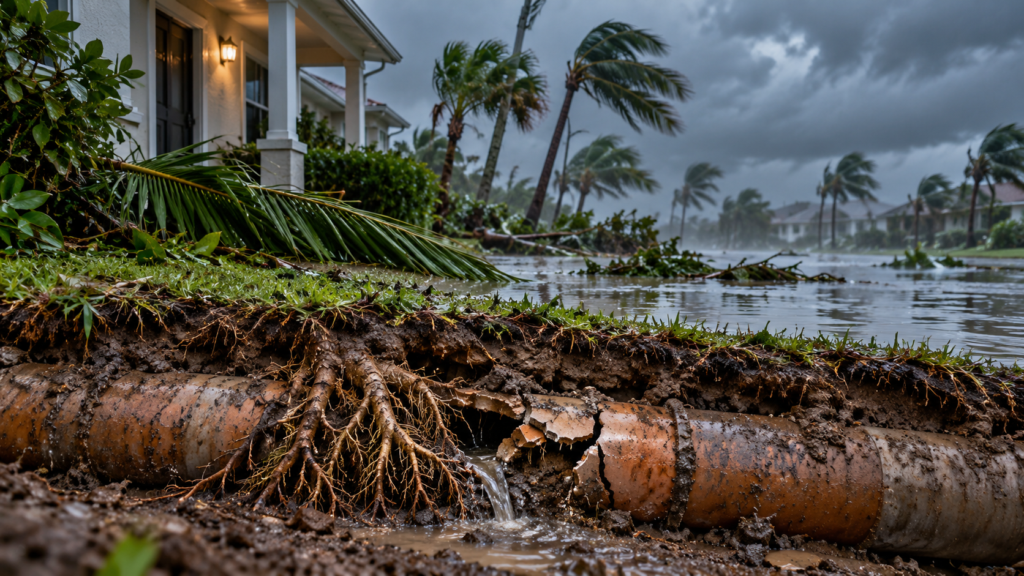
Hurricane season in Florida increases the risk of underground plumbing issues from torrential rains, storm surges, and other storm factors. Learn how hurricanes and severe storms can affect sewer systems and the signs of hurricane sewer line damage to watch for.
Can Hurricanes Damage Sewer Lines?
Hurricanes can damage sewer lines, even in areas outside a storm’s direct path. The Florida coast generally has high water tables and is highly prone to flooding. Additionally, many areas in Florida have aging municipal sewer systems that can’t handle major storms. Some homes along the Emerald Coast also have original pipe materials, such as clay, orangeburg, or cast iron, that have deteriorated and are vulnerable to storm damage.
How Hurricanes and Severe Storms Can Affect Sewer Lines
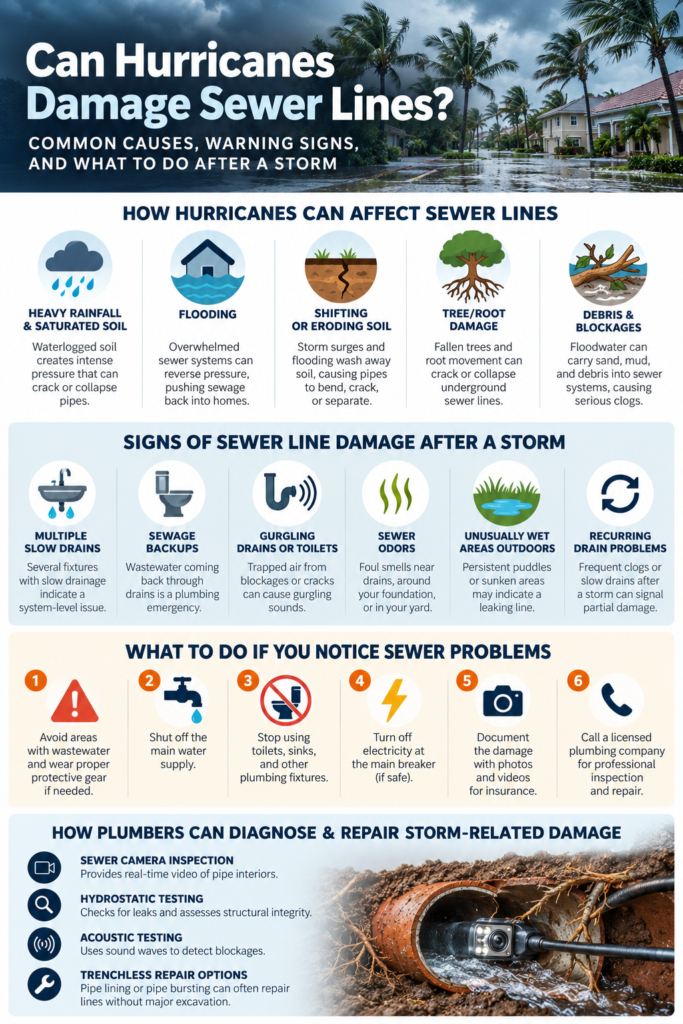
Hurricanes and severe storms impact sewer lines in different ways, potentially worsening existing problems or creating new damage.
Heavy rainfall and saturated soil
Torrential hurricane rains oversaturate the soil, and the immense weight of waterlogged soil creates intense pressure that pushes against pipe walls. Older pipe materials may crack or collapse under severe structural stress. If your sewer line already has cracks or unsealed joints, groundwater seeps into the system more quickly.
Flooding
When rain and storm surges overwhelm Florida sewer systems and fill public mains beyond capacity, also known as surcharging, the excessive volume of stormwater and sewage reverses pressure. Without a backwater valve, this pressure pushes sewage back toward homes and through the lowest entry points, such as ground-level floor drains, bathtubs, and sinks.
Shifting or eroding soil
Storm surges wash away soil around underground sewer lines. As it resettles, uneven ground can bend, crack, or separate sewer lines. In certain spots, shifting soil removes support from sewer lines and creates bellies, where solid waste collects and causes chronic blockages.
Tree/root damage
Tree roots seek the moisture and nutrients in underground sewer lines, and aging clay materials are especially vulnerable. When hurricane-force winds and flooding topple trees that have infiltrated sewer lines, they also rip out roots and crack or collapse sewer lines. Long after a storm, tree roots again target residential lines with even hairline cracks.
Debris and blockages
Floodwater and storm surges sweep debris into sewer systems. Flooding carrying heavy grit, mud, silt, and other debris can enter through any opening, such as damaged lines or broken or missing cleanout caps. The influx of heavy materials may worsen existing partial blockages, such as from grease, soap scum, scale, or tree roots, and create a solid obstruction that blocks all wastewater flow.
Signs of Sewer Line Damage to Check After a Storm
Even if a smaller storm appears to have left your sewer lines unaffected, it’s still important to check for signs of damage after it subsides, whether it’s rated a Category 1 or Category 5 event. Look for these signs of sewer line damage after a storm to protect your system from failure later on.
Multiple slow drains
A single slow-draining sink or shower usually means a localized clog. Multiple fixtures with slow drains or standing water indicate system-level problems, such as a blocked or collapsed main sewer line.
Sewage backups
Wastewater backing up through your drains is a plumbing emergency and a clear sign of sewer line blockages or damage. After major hurricanes, oversaturated soil and flooding can overwhelm private and municipal systems for weeks, so backups may recur after the storm subsides.
Gurgling drains or toilets
When sewer lines are blocked or cracked, air becomes trapped inside the pipes. This trapped air bubbles as it forces its way through restricted areas, creating gurgling sounds from drains or toilets when other fixtures or appliances are in use.
Sewer odors
Your system should contain sewer gases in normal conditions. If you smell pungent or foul odors near drains, around the foundation, or in your yard, sewer line blockages or cracks may be pushing sewer gases upward.
Unusually wet or sunken areas outdoors
Water should drain or evaporate relatively evenly after a storm, and some puddles may linger at the bottom of subtle slopes in your yard. If puddles or oversaturated soil persist well after the rest of your yard has drained, or if you notice depressions in the ground, a cracked or collapsed underground line may be leaking into the surrounding area.
Recurring drain problems
Recurring drain problems signal that the storm left behind partial damage, even if you haven’t experienced major problems. If you repeatedly clear drains or plunge toilets in the weeks or months after a storm, sand, rocks, tree roots, or other debris may be creating a chronic restriction that will likely worsen without attention.
What to Do if You Notice Sewer Problems After a Hurricane
Use these tips if you notice sewer problems after a hurricane:
- Avoid entering areas with wastewater, which may contain raw sewage or hazardous debris. If you need to access these areas, wear personal protective equipment to minimize exposure risk.
- Shut off the main water supply.
- Stop flushing toilets, running sinks, or using other plumbing fixtures or appliances.
- If you haven’t already, shut off the electricity at the main circuit breaker, provided that it’s safe to do so.
- Document the damage with photos and videos before you begin cleanup or repairs, as needed for insurance, whether you have a standard policy or add-on coverage for backups or service lines.
- Call a licensed plumbing company for professional inspection and repair.
When Should You Schedule a Sewer Line Inspection?
Schedule a sewer line inspection immediately after a storm or hurricane if you notice signs of damage. An inspection identifies underlying damage, helping to:
- Detect and address problems before they worsen.
- Protect your household from biohazards.
- Protect your property from further damage.
- Document insurance claims.
How a Plumber Can Diagnose Storm-Related Sewer Problems
Plumbers diagnose storm-related sewer problems using a combination of advanced technology and professional knowledge:
- Sewer camera inspection: High-resolution cameras mounted on cables travel through cleanouts or drain openings to provide real-time video of pipe interiors.
- Hydrostatic testing: Pressure test to assess the structural integrity and seal of sewer piping and determine whether the system has a leak.
- Acoustic testing: Uses a specialized transmitter/receiver to detect blockages and measure capacity in sewer pipes with sound waves.
- Exterior evaluation: Inspections for surface depressions, soggy patches, foul odors, or other signs of sewer line problems.
Can Damaged Sewer Lines Be Repaired Without Excavation?
Plumbers can often repair damaged sewer lines in businesses or homes without needing excavation, depending on the extent of the damage. There are two main types of trenchless sewer line repair:
- Pipe lining: Technicians insert an epoxy resin-coated liner into the damaged pipe through an access point, then inflate and cure it in place to seal cracks seamlessly.
- Pipe bursting: Plumbers pull a bursting head through the system to break the old, damaged section apart and replace it with a new, high-durability pipe.
Schedule a Sewer Line Inspection With Tru Plumbing and Gas
Protect your property and home from underground plumbing problems and hurricane sewer line damage with Tru Plumbing and Gas. Contact us today to schedule sewer inspection and repair with our team.
Frequently Asked Questions
Do you offer financing for sewer line repair and replacement?
Yes, Tru Plumbing and Gas provides financing for qualifying sewer line repair and replacement projects. We partner with GoodLeap to offer flexible payment plans that fit your budget.
How can I avoid sewer line damage from hurricanes?
System upgrades, regular inspections, and prompt repairs are the most effective ways to prevent hurricane-related sewer line damage. Plumbers can install backflow preventers to stop overwhelmed municipal systems from pushing wastewater back into your home, and drain cleaning can clear out roots that have invaded your underground lines.
Should I schedule a sewer line inspection before hurricane season in Florida?
Yes, scheduling a sewer line inspection before hurricane season in Florida helps prepare your system from heavy rain and flooding. Inspections catch hidden problems that leave your system vulnerable during storms, such as previous storm damage, sediment buildup, tree roots, food waste, and grease.
Author Info

