



Why Do My Drains Gurgle When It Rains?
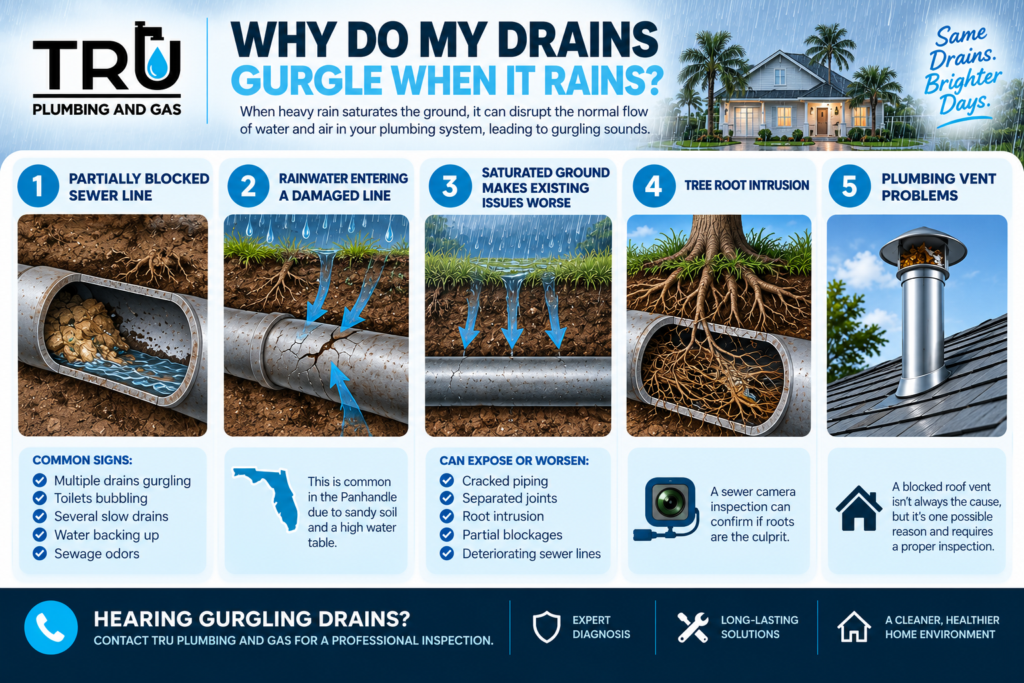
If your drains gurgle when it rains, air is likely being pushed or pulled through the plumbing because water isn’t moving normally through the drainage system. Partial sewer blockages, damaged sewer pipes, groundwater entering a compromised line, or venting problems can cause this to happen when the ground around your plumbing becomes saturated.
Gurgling is a symptom, not a diagnosis. A single brief noise doesn’t always mean there’s a major problem with your sewer system. But if you keep asking “why do my drains gurgle” every time there’s a storm, it’s worth getting a second look.
What Actually Causes the Gurgling Sound?
Gurgling occurs when air is forced through standing water in a drain trap rather than moving freely through the vent system.
Every fixture in your home has a U-shaped trap that holds a small amount of water, which blocks sewer gases from coming back into your house. Vent piping running up through the roof lets air into the system so water drains properly and the trap stays full. When your plumbing system is working normally, wastewater and the air moving behind it both move freely, and you don’t hear a thing.
When a blocked or damaged pipe restricts drainage, water flowing past the restriction creates suction. If the air can’t get in through the vents, it gets pulled through the nearest trap instead, creating the familiar gurgling, bubbling, or glugging noises you hear when it rains.
1. Your Main Sewer Line May Be Partially Blocked
A partially blocked sewer line is one of the most common causes of rain-related gurgling. Your line can still drain when it’s partially obstructed, which is why a restriction often goes unnoticed before it starts producing symptoms.
A partially blocked sewer line has a narrower opening for wastewater to move through. When household water use is light, water flows past the restriction, and your system seems to be working normally. But when heavy rains overwhelm the line, water backs up behind the obstruction, and air escapes through the nearest opening.
Some common causes of sewer line restrictions include:
- Grease and debris buildup
- Mineral scale
- Tree roots
- Deteriorated piping
- Foreign objects
- Other obstructions
A few signs to watch out for that signal a main-line issue instead of a single-fixture problem include:
- Multiple drains gurgling
- Toilets bubbling
- Several slow drains
- Water backing up into tubs or showers
- Sewage odors
Problems that affect multiple fixtures at once are generally more concerning than a single noisy sink. One sink usually signals an issue with that fixture’s drain, while the whole house making noise at once usually stems from a restriction in the main line.
2. Rainwater May Be Entering a Damaged Sewer Line
A sanitary sewer pipe is designed to carry wastewater only. But an underground pipe with cracks, separated joints, deterioration, or other defects can allow groundwater to seep in.
During heavy rain, saturated soil can increase the amount of groundwater entering these compromised pipes and put added pressure on any opening in the line. Water entering the already compromised sewer line then reduces the available capacity for wastewater from your home, slowing drainage, changing air movement, and causing gurgling.
The Panhandle’s sandy soil and high water table can make this issue show up more often. The tropical downpours move lots of water through the ground quickly, putting pressure on any line that’s already compromised.
3. Saturated Ground Can Make Existing Sewer Problems More Noticeable
Heavy rain often isn’t the cause of sewer problems, but it can make existing issues more apparent.
Afternoon storms along the Emerald Coast can drop several inches of rain in a short time and saturate the soil surrounding buried plumbing. That saturation changes the conditions your sewer line operates under, so a pipe with hidden damage or buildup can suddenly fail to keep up and start showing audible symptoms.
Heavy rainfall tends to expose or worsen common issues like:
- Cracked piping.
- Separated joints.
- Root intrusion.
- Partial blockage.
- Deteriorating sewer lines.
4. Tree Root Intrusion May Be Restricting the Sewer Line
Tree roots are drawn to moisture, pulling them toward sewer piping with cracks, loose joints, or other openings. Once a root finds an opening, it grows toward the water source and can work its way inside the pipe. From there, it continues to grow and collect debris as it moves along the line.
Heavy rain doesn’t cause root intrusion, but rain-related symptoms can expose an intrusion that has been developing for years. If gurgling, slow drains, or backups keep recurring, a sewer camera inspection can help confirm if roots are the culprit.
5. Your Plumbing Vent Could Be Contributing to the Problem
Plumbing vents let air into the drainage system so wastewater can flow without pulling a vacuum behind it. When a vent is blocked or damaged by debris, nests, or damage to the pipe itself, the air has to come from somewhere else, which often means it gets pulled through the nearest trap. The result is gurgling, slow-moving drains, bubbling toilets, and sewer odors.
A blocked roof vent isn’t always the cause when noise starts during a storm. Vent problems, partial blockages, root intrusion, and infiltration all produce similar symptoms and require a proper inspection to tell apart.
Why Do Multiple Drains Gurgle at the Same Time?
When multiple fixtures gurgle together, the cause is usually downstream, where they share piping. A single gurgling sink often indicates a localized problem in the branch drain or vent affecting only that fixture. But when toilets, showers, tubs, and sinks in different parts of the house all start making noise, the shared component is the main drain or sewer line.
If you notice slow drainage throughout the home, strange smells, sewage backing up after heavy rain, or repeat problems, it’s time to call a plumber.
Why Does My Plumbing Smell Like Sewage After It Rains?
Sewer odors combined with gurgling usually signal that air isn’t moving normally through the plumbing system or that a drainage or sewer issue is letting gas escape where it shouldn’t. Common contributors include:
- A drain or sewer blockage.
- Venting problems.
- Compromised sewer piping.
- Dry or disturbed traps.
- Other drainage problems.
The odor alone doesn’t prove a sewer line failure, but when it’s combined with slow drains, backups, or gurgling, it points to a more urgent issue.
Is Gurgling a Warning Sign of a Sewer Backup?
Sewer line gurgling can warn that a backup is developing. Gurgling often appears before wastewater begins backing up because restricted drainage and abnormal air movement start long before a line fails completely.
Keep an eye out for the following warning signs that a sewer backup may be coming:
- Multiple gurgling fixtures
- Several slow drains
- A bubbling toilet
- Water rising in a tub or shower when another fixture drains
- Sewage odors
- Wastewater coming up through low-level drains
What Should I Do If My Drains Start Gurgling During Heavy Rain?
If you have gurgling drains after heavy rain, focus on reducing the load on your system until you figure out the cause. Here’s what to do:
- Count how many fixtures are affected and where they are in your home.
- Check for slow drains or backups at each fixture.
- Limit unnecessary water use if multiple fixtures are having problems.
- Avoid repeatedly flushing a toilet if it’s bubbling or backing up.
- Keep people and pets away from wastewater.
- Call a plumber if the problem affects multiple fixtures, involves sewage, or returns every time it rains.
Always avoid putting chemical drain cleaners down a drain you suspect is tied to a main-line problem. These products aren’t designed for main sewer line problems and can cause more damage to your piping.
Should I Call a Plumber If the Gurgling Stops When the Rain Stops?
If you notice gurgling every time it rains, call a plumber. Plumbing returning to normal after the ground dries out doesn’t mean the underlying issue has disappeared.
When the storm passes and the noise stops, the problem can feel resolved. What actually happened is that the conditions that pushed your system past its limit returned to normal, but the crack, root mass, or buildup is still there, waiting for the next storm.
A recurring rain-related pattern can provide useful diagnostic information. Potential issues a plumber may find include:
- A partial sewer blockage.
- Groundwater infiltration.
- Cracked sewer piping.
- Root intrusion.
- Venting problems.
When scheduling service, mention the rain connection to your plumber. This can help them narrow down the possibilities before arriving and diagnose the issue faster.
How Can a Plumber Find the Cause?
Professional diagnosis narrows down the possibilities in order, starting with what’s accessible and then moving to what’s buried. Depending on your symptoms, a plumber may:
- Inspect affected fixtures.
- Evaluate drainage patterns across your home.
- Check accessible plumbing and cleanouts.
- Perform drain and sewer testing.
- Use a sewer camera to inspect underground piping.
- Look for blockages, roots, cracks, deterioration, or other defects.
This process allows them to confirm what’s wrong before recommending repairs, so you only pay to fix the problem you actually have.
Why a sewer camera inspection can help
A sewer camera inspection lets you see inside your line to understand what’s happening without digging up your yard. It can help determine if the problem is caused by:
- Heavy buildup.
- Root intrusion.
- Damaged piping.
- Pipe offsets.
- Cracks.
- Other visible sewer-line issues.
What Happens If the Sewer Line Is Clogged or Damaged?
The right repair for a damaged or clogged sewer line depends on what the inspection finds. Treatments can include:
- Professional drain cleaning
- Hydro jetting
- Root removal
- Sewer-line repair
- Sewer-line replacement
- Correcting a venting problem
A line that’s restricted by grease and scale may only need a thorough drain cleaning, while one that’s cracked or collapsing may need a full replacement. Your plumber can walk you through your options, helping you choose the right solution and decide whether hydrojetting or a full sewer line replacement makes more sense.
Don’t Ignore Drains That Gurgle Every Time It Rains
While an occasional drain noise may not signal a serious problem, recurring gurgling is worth investigating. If you have multiple noisy drains, bubbling toilets, slow drainage, or sewage odors that return after every heavy rainfall, it’s time to have the system looked at.
With the Emerald Coast’s summer storm season, tropical systems, and high water table, buried plumbing often reveals its weak points. Scheduling an inspection and catching a partial blockage or a compromised line early on keeps repairs simple and lowers costs.
At Tru Plumbing & Gas, we help homeowners across the Florida Panhandle get to the bottom of rain-related drainage problems. We provide drain cleaning, sewer camera inspections, hydro jetting, sewer line repair, and complete diagnostics that combat Florida plumbing problems. We also offer flexible financing options and membership programs to keep plumbing services more manageable.
If your drains gurgle every time it rains, schedule an inspection with our residential or commercial plumbers. We proudly serve homes across the Emerald Coast, including:
- Santa Rosa Beach
- Navarre
- Crestview
- Surrounding Emerald Coast and Florida Panhandle communities
