



Why Your Drains Smell Worse in Florida Summer Heat
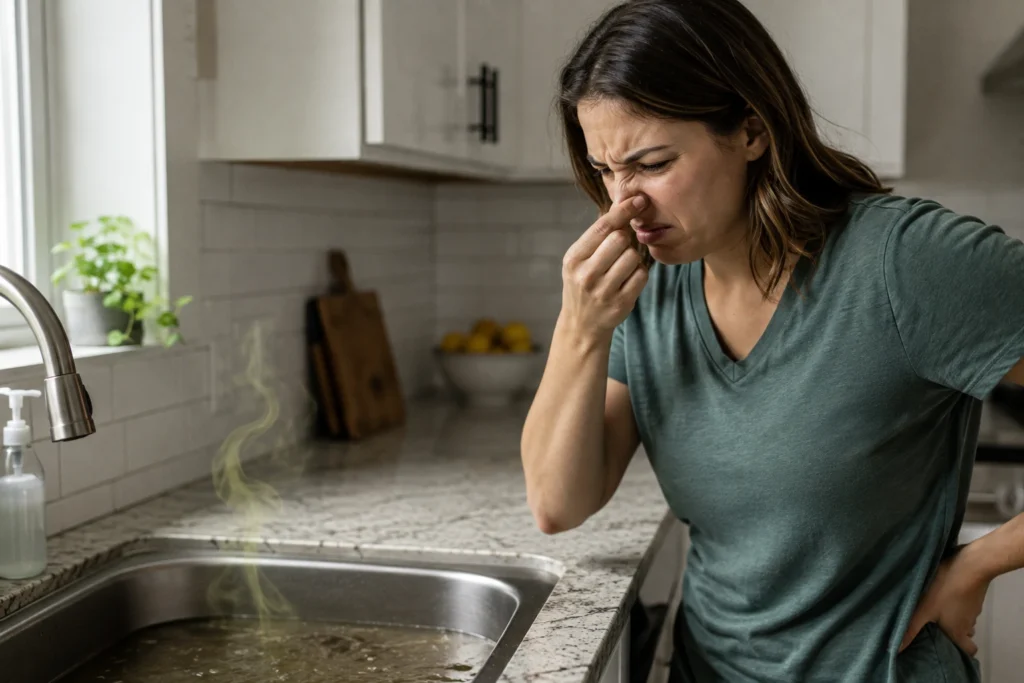
Many Florida homeowners notice pungent drain odors during the hottest months of the year, with drains in kitchens, bathrooms, laundry areas, and other spaces becoming unpleasantly smelly overnight. Florida’s subtropical climate subjects plumbing systems to hot, muggy conditions during the summer, potentially amplifying underlying problems that previously went unnoticed during cooler weather. If your drains smell in the summer, there may be other factors behind the odors, including blockages, venting problems, or bacterial overgrowth.
How Florida’s Heat and Humidity Intensify Drain Odors
Summer doesn’t necessarily create drain problems — instead, it exposes existing issues. Drains may contain months of accumulated grease, soap residue, hair, food particles, or other organic materials, but these problems only become noticeable once the summer arrives.
Florida’s intense heat and humidity create ideal conditions for odor-producing bacteria inside your home’s or business’s drains. Further, Florida’s sandy, mineral-rich water creates textured scaled surfaces that are more likely to catch organic materials that bacteria feed on. Combined, these conditions mean that odors can quickly become pungent in the summer. Humid air also traps odors indoors, especially in kitchens, bathrooms, and other areas with drains, and warm weather increases sewer gas movement.
Common Causes of Smelly Drains in Florida During Summer
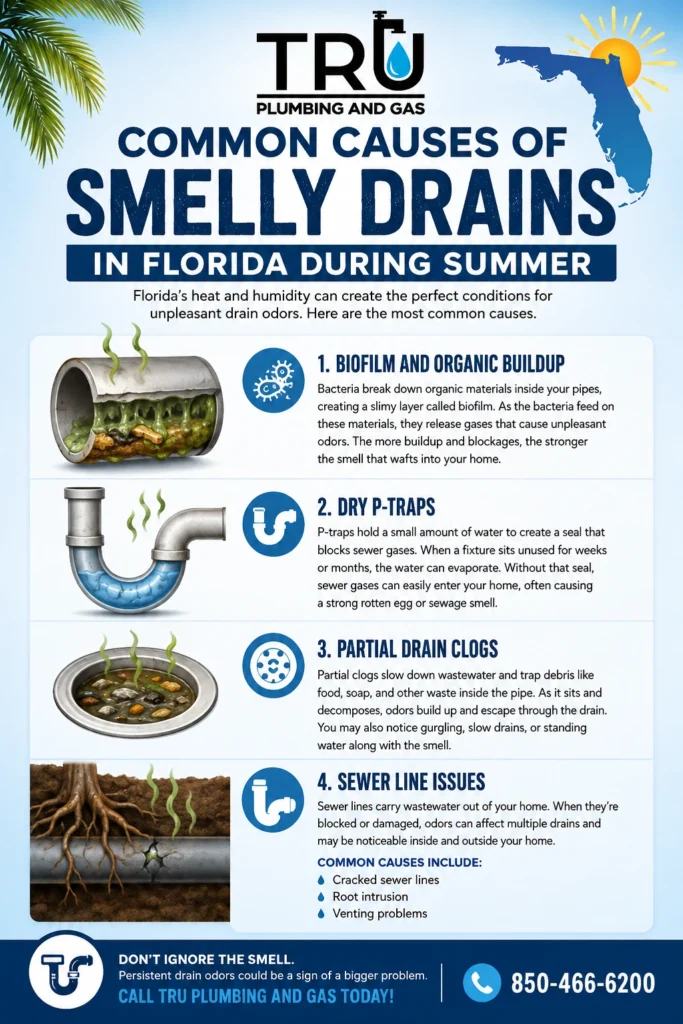
Several conditions commonly contribute to plumbing drain smells during Florida’s hottest months.
Biofilm and organic buildup
As bacteria break down organic materials accumulated inside your pipes, they create a slimy layer on the interior walls, called biofilm. As the bacteria feeds on organic materials, it releases gases that emit unpleasant odors. With more blockages and biofilm, the odor becomes even stronger and wafts into your home through the drains.
Dry P-traps
A P-trap is the curved section of pipe beneath a drain that persistently holds a small amount of water. This water provides a seal between your home and the sewer system and prevents sewer gases from traveling back through the drain.
When a guest bathroom, floor drain, utility sink, or other fixture sits unused for weeks or months, the water in the trap may evaporate. Without the water, sewer gases waft into your home freely, often creating a strong rotten egg or sewage smell.
Partial drain clogs
Partial drain clogs can emit odors before they become full blockages. As debris accumulates inside the pipe, wastewater moves through the drain more slowly and becomes trapped behind the obstruction. Food particles, soap residue, and other waste are stuck and decomposing inside the line, and the resulting odors build up and escape through the drain opening. You may also notice occasional gurgling, slow drains, or standing water along with unpleasant smells.
Sewer line issues
Deeper in your system, sewer lines collect wastewater from drains and transport it out of your home. Unlike drain odors caused by buildup inside a single fixture, blocked or damaged sewer lines produce smells that affect multiple drains and may become more noticeable inside and outside the home. If they’re persistent, these sewer odors potentially indicate a bigger problem.
These are the most common causes of sewer smells from drains:
- Cracked sewer lines
- Root intrusion
- Venting problems
Which Drains Are Most Likely to Smell?
Drains are prone to odors for different reasons, depending on their purpose:
- Bathroom sinks: Toothpaste, soap residue, and hair gradually accumulate inside the relatively narrow drain opening and trap, where buildup can develop quickly.
- Showers and tubs: Hair and soap scum collect on pipe walls, accelerate biofilm growth, and emit bathroom drain smells.
- Kitchen sinks: Grease cools and hardens inside drain pipes, where it can trap food scraps and garbage disposal buildup and produce kitchen drain odors.
- Floor drains: Infrequent use allows water in the P-trap to evaporate, removing the barrier that normally separates the home from the sewer system.
DIY Solutions That May Help
Several DIY strategies can limit buildup in your drains and prevent or lessen odors:
- Flush unused drains: Pour water into rarely used drains at least once a month to refill the P-trap and restore the barrier that blocks sewer gases.
- Clean drain covers: Remove hair, soap residue, and other visible debris before it enters the drain and contributes to buildup.
- Clean garbage disposals: Use manufacturer-approved cleaning methods to remove food residue that can remain inside the disposal between uses.
- Avoid harsh chemical drain cleaners: Chemical products provide temporary results and rarely remove the source of recurring odors, and they can damage pipes in the process.
When a Smelly Drain Means You Need a Plumber
A smelly drain may indicate deeper plumbing issues that require professional diagnosis, especially if it coincides with other plumbing problems. Call a plumber if you notice these signs:
- Recurring odors
- Multiple drains smelling at once
- Sewer gas smell in the house
- Slow drainage
- Gurgling sounds
- Frequent clogs
Professional Solutions for Persistent Drain Odors
These professional plumbing services identify and address the underlying source of persistent drain odors rather than masking them.
Drain cleaning
Professional drain cleaning methods, such as hydro jetting, remove buildup from the interior of sewer lines. By blasting away blockages and scouring the interior walls, drain cleaning services clear away biofilm and other debris that contribute to drain odors.
Video camera inspections
Video camera inspections allow plumbers to see clearly inside drain and sewer lines. This technology pinpoints clogs, tree roots, cracked or collapsed pipes, and other conditions.
Sewer line diagnostics
When odors originate from deeper in your plumbing system, sewer line diagnostics can uncover the cause. These inspections can reveal blockages, backups, damaged pipes, and other issues affecting the flow of wastewater and sewer gases and improve the accuracy of repairs.
Plumbing vent evaluation
Plumbing vents balance pressure throughout the drainage system. A vent evaluation locates clogs or damage to determine the cause behind unpleasant odors, slow drains, and gurgling toilets.
Preventing Drain Odors Year-Round in Florida
Many drain problems develop gradually as buildup accumulates inside pipes or plumbing components go unused for prolonged periods. Consistent maintenance improves drainage performance, reduces the likelihood of unexpected plumbing issues, and helps keep the system operating efficiently throughout the year. Try these preventative strategies:
- Schedule routine drain cleaning: Professional drain cleaning in Florida removes buildup before it impedes regular flow and pressure, reducing the likelihood of clogs, standing water, backups, and deeper sewer line problems.
- Avoid pouring grease down drains: Dispose of grease properly rather than pouring it down drains, where it cools, hardens, and becomes a stubborn obstruction.
- Run water in unused fixtures: Maintaining water in P-traps preserves the seal between your home and the sewer line gas.
- Address slow drains early: Resolving minor drainage concerns before they worsen can prevent more extensive blockages, disruptions, and emergency service calls.
- Schedule annual plumbing inspections: Routine inspections address developing problems early, allowing homeowners to plan repairs proactively and protect the rest of their plumbing system and home.
Trust TRU Plumbing & Gas for Drain Cleaning and Sewer Solutions
If your home has persistent drain odors, it usually takes professional support to eliminate them. TRU Plumbing & Gas provides drain cleaning, sewer diagnostics, camera inspections, and plumbing repairs throughout the Florida Panhandle. Our team uses advanced diagnostic equipment to locate the source of recurring odors and recommend long-lasting solutions. Contact us at TRU Plumbing and Gas today to schedule plumbing services.
Author Info

