



Slab Leak Warning Signs in Florida Homes
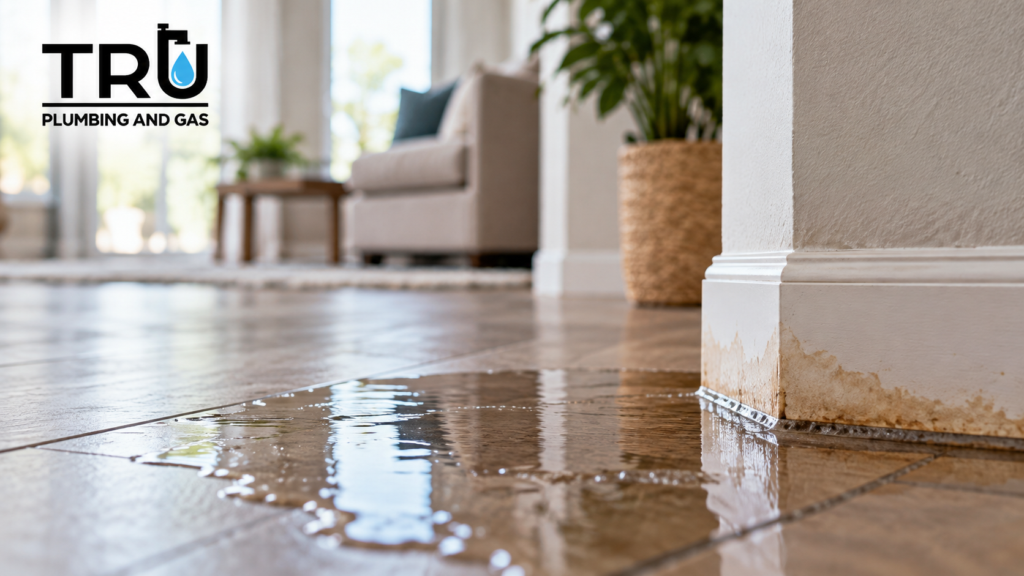
Your home’s foundation is, naturally, foundational to the entire structure. If a water leak finds its way to the home’s foundation slab, it can cause serious damage to the home, eventually threatening the integrity of the entire structure if left unchecked for too long. That’s why prompt slab leak detection is so important if you suspect an issue. The team at Tru Plumbing and Gas regularly helps find and fix slab leaks in our service area. Read on for info on what we’ve learned about slab leak warning signs and what to do if you notice them on your property.
What Is a Slab Leak?
A slab leak occurs when water lines underneath or inside a home’s concrete slab foundation develop a leak. Naturally, this isn’t easy to identify visually, as these water lines are usually completely hidden by the foundation. This means slab leaks can go unnoticed for quite some time, causing severe damage to the slab, ruining floors, promoting the growth of hazardous mold, and eventually threatening the safety of the entire structure — even before visible water appears.
This is why early detection is so essential. By understanding the signs of a slab leak, you can catch it before it devastates your home and foundation, preventing exorbitant repair costs and protecting your safety.
What Are the Warning Signs of a Slab Leak?
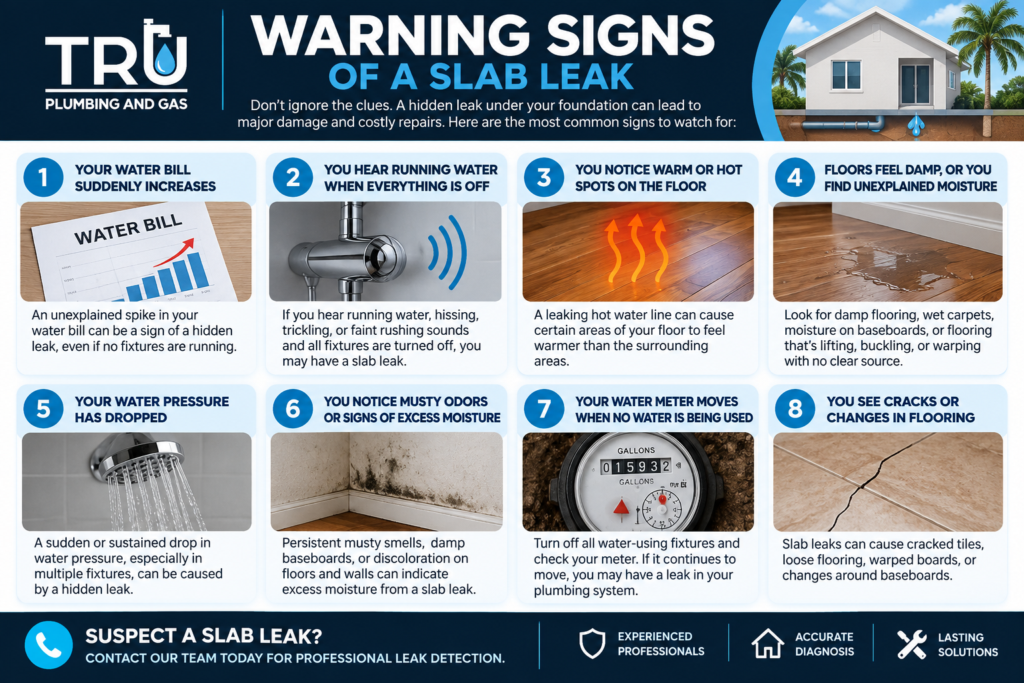
So, how do you tell if you have a slab leak? The most common slab leak symptoms are unexplained increases on your water bills, running water sounds and moving water meters when all fixtures are closed, unexplained warm or moist areas on your floors, low water pressure, and musty odors in the home. Let’s look in detail at these potential signs of a water leak under a concrete slab:
Your water bill suddenly increases
One of the first signs you may notice before seeing any damage from a plumbing leak under a foundation is an unexplained high water bill. Even a minor leak can allow hundreds of gallons of water to escape (even when fixtures are closed), which will be reflected in your water usage. If your water bills are rising and you’re certain that it’s not due to running toilets, dripping fixtures, irrigation issues, or other plumbing leaks, it’s time to call a pro for slab leak detection.
You hear running water when everything is turned off
The next sign of an under-slab water leak that you may notice is the sound of running water when all your appliances are shut off. The noise can vary but may sound like:
- Running water.
- Hissing.
- Trickling.
- Faint rushing sounds.
If you’re hearing these noises and you’re certain that all faucets, toilets, water-consuming appliances, and any other fixture that uses water are off, a hidden water leak in your foundation could be to blame. Hire a leak detection pro as soon as possible to pinpoint and repair the leak.
You notice warm or hot spots on the floor
If your under-slab hot water line is leaking, you might notice certain parts of your floor are warmer than others. Warm spots on the floor are more noticeable with certain flooring materials, such as hardwood, laminate, or vinyl.
A warm floor doesn’t necessarily mean you’re dealing with a slab leak, but if you spot this sign in addition to other slab leak symptoms, it’s time to have a professional plumber investigate and perform slab leak repair.
Floors feel damp, or you find unexplained moisture
As the leak continues to pump water out underneath your foundation, you may start to notice dampness or unexplained moisture on floors throughout the home. This can present in a few different ways, like:
- Damp flooring.
- Wet carpets.
- Moisture on baseboards.
- Water appearing on the floor with no obvious source.
- Flooring that is lifting, buckling, or warping.
Bear in mind that noticing moisture damage on your floor doesn’t mean the leak is in that location. Leaking water travels through cavities beneath the floor or passes through saturated building materials, so this isn’t a reliable method to locate the leak.
Your water pressure has dropped
A more subtle sign of a slab leak is an unexplained, sustained drop in water pressure. If the pressure has dropped in your showers or faucets (and especially if you have low water pressure in multiple fixtures), it may be due to a leak. Hidden leaks can cause significant pressure loss in your plumbing system, though there are other potential causes of low water pressure as well. Hiring a professional ensures you get an accurate explanation for the water pressure issue.
You notice musty odors or signs of excess moisture
Here in Florida, where the ambient humidity is high in the first place, you might not notice excess humidity in your home as quickly as you would elsewhere. As a hidden leak progresses, the large amounts of water increase the home’s humidity, and when combined with the high humidity outside, this can result in a very moist indoor environment and, often, a telltale musty odor. If you notice any of these signs, it’s time to have a pro check for a hidden water leak:
- Persistent musty or moldy odors
- Damp baseboards
- Wet flooring
- Discoloration on floors, baseboards, and at the bottoms of walls
- Moisture that keeps returning, even after dehumidification and cleanup
Your water meter moves when no water is being used
Another sign of a slab leak is noticing changes on your water meter when all fixtures are shut off. Here’s a quick way to see if your water meter is moving due to a slab leak:
- Step one: Turn off all faucets, fixtures, and appliances that use water.
- Step two: Make sure your toilets aren’t filling.
- Step three: Go to your water meter (usually found outside).
- Step four: Watch the meter: If the needle continues to register water use, there might be a leak in your plumbing system.
Keep in mind that a moving water meter when you’re not using water indicates a leak, but that doesn’t necessarily mean the leak is in the foundation. A plumber can do other tests to definitively determine the location of the leak.
You see cracks or changes in flooring
Slab leaks can cause flooring damage quite quickly. Persistent moisture doesn’t interact well with flooring materials, causing issues such as:
- Cracked flooring.
- Loose or dislodged tiles.
- Warped floorboards or tiles.
- Shrinking or other changes around baseboards.
Of course, not all flooring issues are a sign of moisture damage or a slab leak. Your floors may simply be nearing the end of their lifespan, or they might be reacting to high general humidity that isn’t caused by a slab leak. This should be considered a supporting clue rather than a definitive sign of a slab leak.
Why Are Slab Leaks a Concern for Florida Homes?
Here in Florida, many, many homes are built on concrete slab foundations thanks to their lower costs and ease of construction. Because of this, slab leaks are a common issue. Plumbing beneath the foundation can be hard or impossible to inspect yourself, so you have to watch for signs of an issue to know if a leak is forming under the slab.
In addition to damage from leaking water, slab leaks also put you at risk of further issues due to Florida’s already very humid conditions. This can make mold grow more quickly, accelerate rot in wooden structural elements, and even affect your home’s indoor air quality.
What Causes a Slab Leak?
Slab leaks can occur for many reasons. Here in Florida, we often see this issue occur because of:
- Pipe corrosion or deterioration.
- Aging plumbing materials.
- Long-term wear.
- Abrasion as pipes expand, contract, or contact surrounding materials.
- Improper installation.
- Excessive water pressure.
- Shifting or movement around the home.
- Soil movement.
- Damage to underground piping.
Identifying the cause of a slab leak is always a top priority for your plumber. Understanding why the leak occurred can tell them how best to fix it and whether you need additional repairs or repiping to ensure another slab leak doesn’t happen any time soon.
Can You Have a Slab Leak Without Seeing Water?
Yes, you can definitely have a slab leak without seeing water. Because these leaks occur beneath a thick layer of concrete, they can leak and leak unchecked for days, weeks, or even months before you ever see actual water leaking into your home. Instead of waiting to see puddles forming in your basement, look for early clues, such as:
- Higher water bills.
- Meter movement.
- Running-water sounds.
- Warm flooring.
- Reduced pressure.
The sooner you catch a slab leak, the easier, faster, and less expensive it will be to fix. You’ll also be able to avoid the stress and cost of emergency plumbing repairs.
How Do Plumbers Detect Slab Leaks?
Residential and commercial plumbers use a variety of methods to detect and pinpoint slab leaks. Depending on the situation, they’ll use one or more specialized tools to help find the exact location of the leak. This might involve:
- Pressure testing.
- Acoustic leak detection.
- Thermal/temperature detection.
- Moisture detection.
- Isolation testing.
- Inspection of accessible plumbing.
These tools allow our plumbing pros to make a definitive diagnosis of the issue and confirm that the leak is below the slab, not elsewhere in the system.
What Should I Do If I Suspect a Slab Leak?
If you have reason to believe there’s a slab leak in your home, here are the steps to take immediately to prevent further damage:
- Step one: Stop all unnecessary water use to test whether water is still being consumed.
- Step two: Check whether all fixtures and appliances are off.
- Step three: Check your water meter for continued usage.
- Step four: Look for obvious leaks elsewhere in the home.
- Step five: Call a professional plumber for leak detection if the source isn’t apparent.
If there’s significant water entering your home due to a slab leak, we also recommend shutting off the main water supply line and calling an emergency plumbing team immediately. Never attempt to break through your slab, remove flooring, or attempt any underground pipe repairs yourself, as there’s a good chance you’ll do more damage in the process.
How Are Slab Leaks Repaired?
Once our team has located the slab leak, it’s time to fix it. The best way to repair a slab leak depends on the location and the overall condition of the damaged plumbing. Depending on these factors, our repairs may involve:
- Direct pipe repair.
- Rerouting plumbing.
- Repiping a section of the home.
- Other repair methods, based on accessibility and pipe condition.
There’s no single best way to address a slab leak, and the right approach depends on experience and technical knowledge. Our plumbers will always learn as much as they can about your home and the issue before recommending a repair. We know these projects can be a big, unexpected expense, which is why we offer flexible financing for major plumbing repairs, as well as simple, affordable plumbing inspections through our maintenance membership plans.
Don’t Ignore the Warning Signs of a Slab Leak
While slab leaks have the potential to cause serious damage to your home, a basic understanding of common slab leak symptoms can greatly reduce the odds of catastrophe in your space. With that said, these leaks don’t improve on their own, which means your best bet is to call for professional help as soon as you notice one or more signs of a slab leak, including:
- Rising water bills
- Unexplained moisture
- Running-water sounds
- Warm flooring
- Lower water pressure
- Meter movement
If you’re noticing any combination of these problems, it’s time to schedule professional leak detection. The team at Tru Plumbing and Gas handles countless slab leaks each year, using state-of-the-art technology and years of expertise to quickly and accurately locate and permanently repair them. We’re your go-to leak detection team in Florida’s Emerald Coast, including Santa Rosa Beach, Navarre, Crestview, and surrounding communities. To learn more or to schedule immediate leak detection services, contact us today.
